

iPhone Duo: Apple’s First Foldable Phone Has Arrived — Here Is Everything You Need to Know
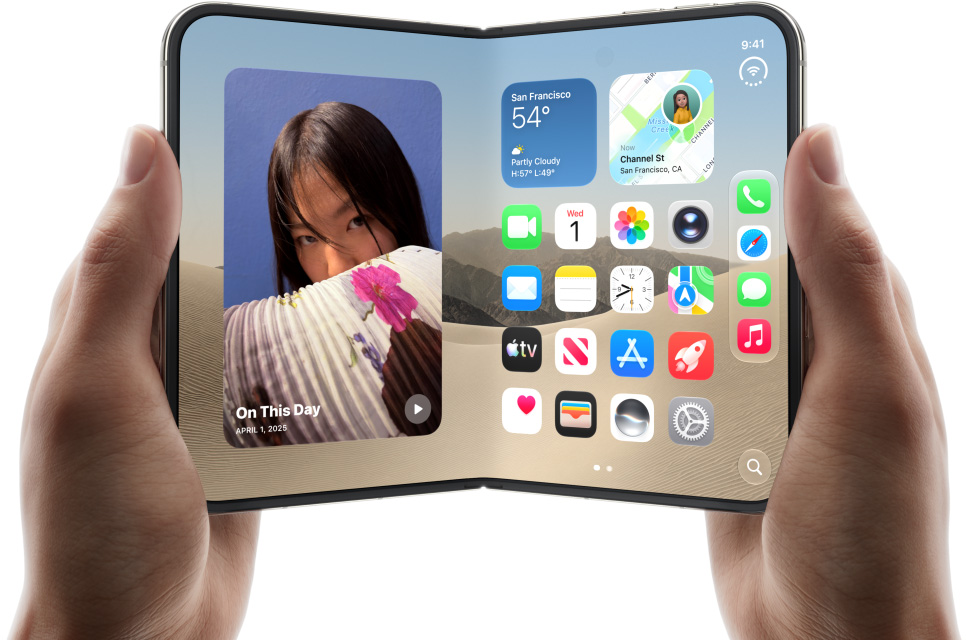
After years of relentless industry rumors and prototype leaks, Apple has officially stepped into the foldable smartphone arena with the iPhone Duo. Unveiled by Apple, the iPhone Duo marks what the company calls its most radical hardware evolution since the original iPhone debuted in 2007.
According to the official announcement on Apple Newsroom, the iPhone Duo combines a passport-sized outer profile with a massive 7.6-inch inner canvas. Powered by a 2-nanometer A20 Pro chip, a brand-new precision hinge mechanism, and an adaptive version of iOS 27, this device aims to redefine what users can expect from a foldable flagship.
Here is an in-depth breakdown of the iPhone Duo’s design, displays, performance, camera capabilities, battery life, pricing, and worldwide availability.
Table of Contents
- Design, Titanium Chassis & Durability
- Dual Super Retina XDR Displays: Tackling the Crease
- Next-Gen A20 Pro Chip & Thermal Architecture
- Innovative Camera System & Foldable Shooting Modes
- Reimagined iOS 27 & True Split-Screen Multitasking
- Dual-Battery Architecture & Charging Speeds
- eSIM-Only Architecture & N1 Wireless Connectivity
- Complete Technical Specifications
- Global Pricing & Release Dates
- The Techsuddo Verdict: Pros & Cons
- Frequently Asked Questions (FAQs)
1. Design, Titanium Chassis & Durability
Foldable phones have long struggled with bulk, fragile hinges, and weak environmental sealing. Apple tackled these friction points with heavy-duty structural engineering:
- Grade 5 Titanium & Mirror Polish: The exterior chassis is built from mirror-polished Grade 5 titanium, keeping the chassis exceptionally rigid without adding excess weight.
- Complex Multi-Link Hinge: Engineered with over 100 micro-components and stiff carbon-fiber support plates, the hinge provides smooth resistance throughout its folding arc and holds the display flat when open. A 3D-printed micro-blasted hinge cover accents the spine.
- Ceramic Shield 2 & IP68 Rating: The cover screen is shielded by Ceramic Shield 2—delivering up to 3x better scratch resistance than previous generations—while the rear features standard Ceramic Shield. Most notably, the iPhone Duo maintains an IP68 rating for water and dust resistance, a rare benchmark in foldable engineering.
The phone is available in two minimalist finishes: Star White and Night Sky.
2. Dual Super Retina XDR Displays: Tackling the Crease
The iPhone Duo’s dual-display design focuses on proportional scaling, meaning content does not abruptly stretch or letterbox when opening the phone:
- Outer Display (Cover Screen): A 5.4-inch Super Retina XDR OLED screen. Closed, the phone sits naturally in one hand—roughly the footprint of a passport—and offers 90% of the active display area of an iPhone 18 Pro.
- Inner Display (Unfolded): Opens into a 7.6-inch Super Retina XDR canvas, providing 50% more display real estate than an iPhone 18 Pro Max.
- Nano-Texture Finish & Stress-Relief Adhesives: To address the dreaded screen crease, Apple implemented a multi-layer lamination stack where layers glide past one another during folding like pages in a book. A specialized nano-texture matte surface dramatically cuts glare and makes the seam virtually invisible during straight-on viewing.
- Brightness & Refresh Rate: Both panels support 120Hz ProMotion, Always-On display functionality, and hit an outdoor peak brightness of 3,000 nits.
- Apple Pencil Support: Apple confirmed that USB-C Apple Pencil support will arrive via a software update later this year, turning the inner panel into a digital sketchbook and notebook.
3. Next-Gen A20 Pro Chip & Thermal Architecture
Driving the iPhone Duo is Apple’s silicon flagship, the A20 Pro, manufactured on the latest 2-nanometer architecture:
- CPU & GPU Gains: A 6-core CPU delivering up to 20% faster speeds than the A19 Pro, paired with a 7-core GPU that boosts graphics performance by up to 40% with enhanced ray-tracing efficiency.
- Dual 16-Core Neural Engine: Delivers twice the machine learning compute power, running complex generative Apple Intelligence models directly on-device.
- Vapor Chamber Cooling: Foldables often suffer from thermal throttling due to divided chassis compartments. Apple coupled the A20 Pro directly with a custom vapor chamber, sustaining up to 35% higher performance during intense 3D gaming and heavy video exports.
4. Innovative Camera System & Foldable Shooting Modes
The form factor unlocks shooting capabilities that traditional bar smartphones cannot replicate:
- 48MP Fusion Main Camera: Features zero shutter lag, large-sensor low-light performance, sensor-shift optical image stabilization, and a 2x optical-quality crop.
- 48MP Fusion Ultra-Wide: Matches the sensor found on the iPhone 18 Pro, supporting expansive landscape compositions and macro photography.
- Under-Display FaceTime Camera: Positioned behind the 7.6-inch inner display, this camera stays hidden when viewing media and activates seamlessly during video calls.
- Fold-Exclusive Camera Features:
- Duo Preview: Displays a live camera feed on the outer 5.4-inch screen so subjects can check their framing while you photograph them using the primary rear sensors.
- Smart Take: Real-time AI models detect when people in the frame settle into natural poses and automatically capture the shot without needing a timer.
- Tripod-Free 4K120 Capture: Prop the phone at 90 degrees on any flat surface to record rock-steady 4K Dolby Vision video at up to 120 frames per second, or capture night time-lapses hands-free.
5. Reimagined iOS 27 & True Split-Screen Multitasking
Rather than just scaling up standard phone apps, iOS 27 reconfigures the user interface specifically for foldable hardware:
- Relocated Navigation & Vertical Dock: To preserve vertical reading room, core navigation controls, status icons, and the app dock tuck cleanly along the side bezels.
- Split View Multitasking: For the first time on an iPhone, you can run two full apps side-by-side, open dual Safari windows for side-by-side product comparisons, or save app pairs to launch simultaneously from the Home Screen.
- Siri AI & Apple Intelligence: The new Siri AI interface runs alongside your active workflow, allowing the assistant to read on-screen context, cross-reference personal documents, and draft responses without taking over your display.
- Upgraded StandBy Mode: Resting the device tented or folded on a desk activates StandBy mode even without being plugged into power, turning the device into an ambient desk clock, calendar widget, or photo frame.
6. Dual-Battery Architecture & Charging Speeds
Powering two high-refresh displays requires a smart power distribution network:
- Dual-Cell Architecture: Apple divided the battery cells across both halves of the chassis, using hardware power-balancing algorithms to run them as a unified unit.
- Battery Endurance: Delivers up to 31 hours of continuous video playback on the large 7.6-inch inner screen, and up to 44 hours when operating exclusively on the 5.4-inch cover screen.
- Charging Speeds: Reaches a 50% charge in approximately 20 minutes via high-wattage USB-C fast charging, or 50% in 30 minutes using compatible MagSafe or Qi2 25W wireless chargers.
7. eSIM-Only Architecture & N1 Wireless Connectivity
Apple has committed to a physical SIM-free design across all international markets for the iPhone Duo:
- Worldwide eSIM-Only: Eliminating the mechanical SIM tray freed up internal volume for battery capacity and structural hinge bracing. The phone supports multi-carrier eSIM profiles and easy carrier transfer.
- N1 Wireless Chip: Apple’s custom network chip delivers native Wi-Fi 7, Bluetooth 6, and Thread smart-home connectivity.
- C2 Cellular Modem: Apple’s in-house modem uses AI-assisted radio tuning to maintain steady signal handoffs and supports mmWave frequencies in supported regions.
8. Complete Technical Specifications
Check full hardware details directly via iPhone Duo Technical Specifications:
| Feature | Technical Specification |
| Inner Display | 7.6-inch Super Retina XDR OLED, 1–120Hz ProMotion, Nano-texture finish |
| Outer Display | 5.4-inch Super Retina XDR OLED, 1–120Hz ProMotion |
| Peak Brightness | 3,000 nits (Outdoor peak) |
| Processor | Apple A20 Pro (2nm) with Vapor Chamber Cooling |
| Neural Engine | Dual 16-Core Neural Engine |
| Storage Options | 256GB, 512GB, 1TB, 2TB |
| Rear Cameras | 48MP Fusion Main (OIS, 2x crop) + 48MP Fusion Ultra-Wide (Macro) |
| Front Cameras | Center Stage Cover Camera + Under-Display Inner Camera |
| Durability | Grade 5 Titanium, Ceramic Shield 2, IP68 water/dust resistance |
| Biometrics | Touch ID integrated into Side Button |
| Software | iOS 27 (Optimized for Foldable Split View) |
| Connectivity | 5G, eSIM Only, Wi-Fi 7, Bluetooth 6, Thread, USB-C |
| Colorways | Star White, Night Sky |
9. Global Pricing & Release Dates
According to the official listing on the Apple Store, worldwide retail pricing starts at:
- iPhone Duo (256GB): $1,999 USD
- iPhone Duo (512GB): $2,199 USD
- iPhone Duo (1TB): $2,599 USD
- iPhone Duo (2TB): $3,199 USD
- Pre-Orders: Begin Friday, October 16, 2026.
- Official In-Store Availability: Friday, October 23, 2026.
10. The Techsuddo Verdict: Pros & Cons
The Good (Pros)
- Pocketable form factor: The 5.4-inch outer screen feels practical and lightweight for everyday, single-handed use.
- Superb display engineering: The nano-texture finish effectively minimizes glare and harsh crease reflections.
- Uncompromising performance: The 2nm A20 Pro with vapor-chamber cooling maintains peak performance without severe throttling.
- True water resistance: IP68 certification offers genuine peace of mind compared to splash-only competitors.
The Compromises (Cons)
- Prohibitive starting price: At $1,999, it is an investment targeted strictly at enthusiasts and power users.
- No physical SIM tray: Users traveling through regions where local eSIM onboarding is limited may face activation hurdles.
- Side-mounted Touch ID: Some legacy users may miss Face ID, though the fingerprint sensor ensures uniform authentication in both folded and unfolded states.
11. Frequently Asked Questions (FAQs)
Q1: Does the iPhone Duo support a physical nano-SIM card?
No. The iPhone Duo is an eSIM-only smartphone globally. It does not contain a physical SIM slot, requiring carrier activation via digital eSIM profiles.
Q2: Is the screen crease noticeable when using the inner display?
While flexible display physics make a slight contour inevitable, Apple’s multi-layer sliding adhesives and anti-reflective nano-texture finish reduce visual crease reflections substantially compared to earlier foldable generations.
Q3: Why did Apple use Touch ID instead of Face ID?
To keep the outer and inner bezels ultra-thin and accommodate an under-display camera inside, Apple integrated a fast capacitive Touch ID sensor directly into the side power button, allowing consistent unlocking whether the phone is open or closed.
Q4: Can I use an Apple Pencil with the iPhone Duo?
Yes. Apple announced that compatibility with the USB-C Apple Pencil will roll out in a software update later this year for note-taking and sketching.
(Official reference links: Apple Newsroom & Apple Store)
Read Also : https://techsuddo.com/samsung

